There's a question that rarely comes up in everyday business conversations.
Not because it's unimportant, but because everything seems to work just fine without asking it.
Where does your data actually live?
Not in the abstract sense. Physically. Right now. The client list, the invoices, the project files, the contracts, the emails.
Someone in the company knows. Probably. Or at least — someone used to know.

A small design studio. A dozen people, an open workspace, good coffee, interesting projects.
The kind of place where everything runs on talent and trust.
Files live on someone's laptop. The main one — the one that's always plugged in, always on. It's not officially a server, but everyone treats it that way. Project folders are shared over the local network. There's a backup somewhere — an external hard drive that someone bought two years ago. It's plugged in. Probably.
No one thinks about this setup, because it's not really a "setup." It just happened. One thing at a time, over months and years, without a single deliberate decision about how data should be stored.
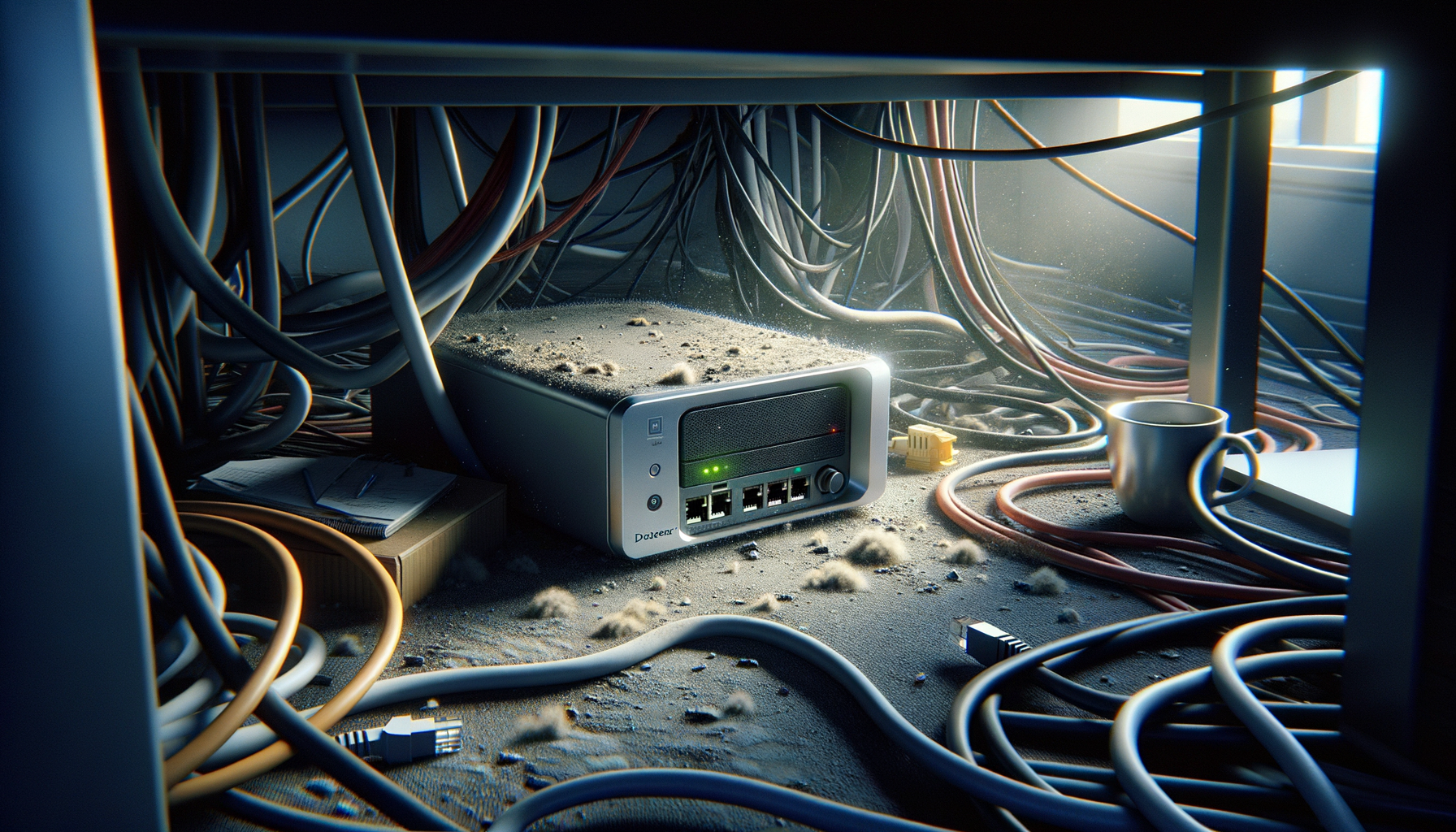
Somewhere under a desk, behind a tangle of cables and a forgotten coffee cup, there's a small box.
It might be a NAS. Or an old PC repurposed as a file server. Or just an external drive connected to a router.
It hums quietly. It does its job. No one remembers when it was last updated — or if it ever was.
No one has checked if the backups actually work.
No one knows what would happen if it stopped.
That's not negligence. It's just how things are when something works long enough to become invisible.
Then there's the other kind of storage — the accidental kind.
A designer keeps all the source files on a personal laptop. The accountant has a spreadsheet with every client's billing history on a home computer. Someone has an entire project archive in a free cloud account that's tied to a personal email.
None of this was planned. None of it was discussed.
It simply grew, one file at a time, in the most convenient direction available.
It feels fine — until someone leaves. Or until a laptop breaks. Or until a free account hits its storage limit and starts silently deleting old files.

The uncomfortable moment usually arrives without warning.
One morning, the shared folder doesn't open. Or the cloud syncs the wrong version. Or someone accidentally deletes a directory, and the "backup" turns out to be six months old — if it exists at all.
That's when the question finally gets asked: where is our data?
And the answer is: everywhere. And nowhere reliable.
Scattered across personal devices, free accounts, forgotten hardware, and one person's memory of where things were put.
The conversation that follows is always the same.
How did this happen?
Who was responsible?
Why didn't anyone set this up properly?
But the truth is — no one was supposed to. No one was asked to think about data architecture for a twelve-person studio. It never felt like it was needed.
The systems weren't designed. They accumulated.
And accumulated systems don't fail dramatically. They erode. Slowly, quietly, until one day the ground isn't there anymore.
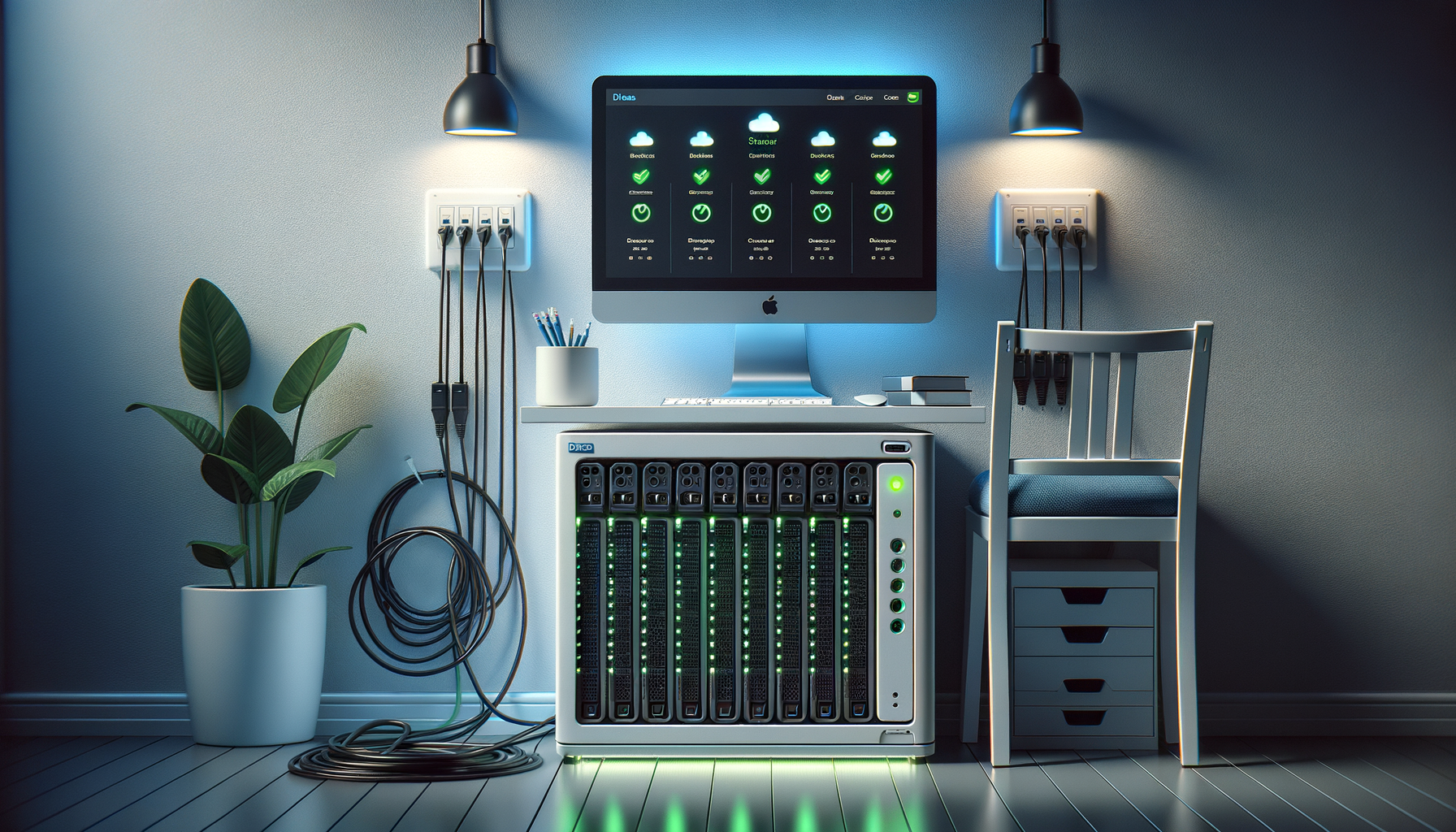
What changes when someone finally takes ownership of data isn't usually dramatic either.
There's no massive migration. No enterprise-grade overhaul.
Often, it's just clarity: what's stored where, who has access, how often backups run, and whether anyone has ever verified that they actually work.
Sometimes it's moving from "someone's laptop" to a proper shared storage.
Sometimes it's setting up automated backups that don't depend on a person remembering to plug in a drive.
Sometimes it's simply writing down what exists and where.
It's not exciting. It's not even particularly technical.
But it's the difference between a business that knows where its work lives — and one that hopes it's still there.
Most of the time, hope works. Until it doesn't.
All images used in this article are fictional and were generated by AI. They do not depict real people, offices, or situations.